Notes from the fold.
How to keep AI content on-brand, build workflows you can rerun, and pick the right models — written by the people building Orisu.

On-brand AI content: the complete guide
AI can generate anything except your brand, unless you build a system for it. The complete framework: codify, inject, repeat, review, measure.
On-brand AI
Can you use AI-generated content commercially? Licenses, ownership, and indemnity compared
Three different questions hide inside 'is this AI image safe to use?': license, ownership, and who pays if you get sued. Here's how the major AI providers differ on each, and what it means for brand teams.
AI workflows
You can now run Orisu from ChatGPT
Orisu's MCP connector now works in ChatGPT. Add one URL, sign in, and build and run your content workflows without leaving the chat.
Tools & comparisons
What is agentic image generation? Reasoning image models, explained
In 2026, image models stopped just rendering and started reasoning: searching the web, writing code, and checking their own work. Here's what agentic image generation is and when marketing teams should use it.
Playbooks
What native 30-second AI video changes for ad makers
Seedance 2.5 generates 30-second clips in one pass, with sound. Here's what that changes for UGC-style ads, how to draft cheap and finish long, and how to have the workflow ready before the model ships.
Tools & comparisons
Seedance 2.5: release date, what's new, and how to be ready on day one
ByteDance's Seedance 2.5 brings native 30-second clips, 50 reference inputs, and joint audio-video generation. What's confirmed, what's not, and how to have a workflow ready the day it ships.
Tools & comparisons
How much does AI content generation actually cost? (2026)
What AI content generation really costs in 2026: seat vs credit vs API pricing, why video dwarfs images, where the hidden waste hides, and a formula for estimating your own volume.
On-brand AI
Prompts, voice profiles, or fine-tuning: how to keep AI copy in your brand voice
AI copy drifts into a generic voice fast. Compare the three ways to hold your brand voice in AI writing — prompt examples, a stored voice profile, and fine-tuning — and which to reach for first.
Playbooks
How to repurpose webinars into social clips with AI
A 45-minute webinar holds a month of social content. This playbook walks through finding the moments, cutting the clips, captioning, resizing, and shipping them on-brand with AI.
Tools & comparisons
How to choose AI models for marketing: the 2026 guide
New models ship every month and the leaderboards disagree. Here is the full framework for choosing image, video, and audio models for marketing work — and knowing when to switch.
AI workflows
7 AI content workflows every marketing team should steal
Seven repeatable AI content workflows, from URL-to-ad-variants to one-click weekly drops, with the pipeline shape, who each is for, and how to build it.
Playbooks
How to storyboard AI video ads before you spend a credit
AI video is too expensive to art-direct by re-rolling. Storyboard with cheap stills first, get sign-off, then animate only the approved frames. A step-by-step playbook.
On-brand AI
Machine-readable brand guidelines: making your brand legible to AI
Your brand guidelines' most frequent reader is now a machine. Here's what machine-readable brand guidelines are, why the PDF fails, and how to translate voice and visual rules into instructions AI can follow.
AI workflows
Meta, Google, and TikTok will generate your ads now. Should you let them?
Meta's Muse Image, TikTok Symphony, and Google's asset generation all make ad creative for you. Where platform AI helps, where it flattens your brand, and how to split the work.
Tools & comparisons
Veo, Kling, and friends: which AI video model to use when
A job-by-job guide to picking an AI video model: cinematic spots, UGC-style product clips, animating stills, talking heads, and cheap drafts vs hero finals.
Playbooks
AI avatar videos for marketing: 7 on-brand use cases (2026)
A practical roundup of where AI avatar and spokesperson videos earn their keep in marketing — plus the brand and legal lines you should not cross.
Tools & comparisons
AI image model leaderboards in 2026: what the rankings actually measure
The top AI image models now sit within a handful of Elo points on the public arenas. Here's what those leaderboards measure, what they miss, and how marketing teams should read them.
Playbooks
A full product launch asset set from one URL
How to turn one product page URL into a complete launch pack (hero visuals, social announcements, ad variants, an email header, and a short video) in a single pipeline.
AI workflows
AI slop: what it is, and how marketing teams avoid it
'Slop' was Merriam-Webster's 2025 word of the year: low-quality AI content made in quantity. Here's why marketing teams produce it, what it costs, and the workflow that prevents it.
On-brand AI
Reference images, brand kits, or fine-tuning: how to lock AI to your brand
Three ways to make AI generation match your brand: reference images, a structured brand kit, and fine-tuning. How each works, where each breaks, and which to reach for first.
Tools & comparisons
AI voiceover for marketing videos: which text-to-speech to use when
AI voiceover is good enough for real marketing video now, but the right approach depends on the job. How dedicated TTS, native-audio video, avatar tools, and human voice compare, and when to use each.
AI workflows
Multimodal AI pipelines: image, video, text, and audio in one place
Real campaigns need scripts, voiceovers, video, captions, and thumbnails. What changes when all four content types share one pipeline, and when separate tools still win.
Playbooks
The Q4 holiday creative playbook: start your AI production line in July
Holiday creative eats Q4 teams alive every year. Here's a month-by-month playbook for building an AI production line in July that carries you through Cyber Week.
On-brand AI
Brand consistency at scale: a playbook for lean teams
More channels, more assets, same two designers. A six-step playbook for keeping everything on-brand when demand outgrows the team.
On-brand AI
How to review AI content before it ships: a brand-safety checklist
AI lets you make marketing content faster than anyone can check it. Here's a step-by-step review workflow to catch off-brand, false, or non-compliant output before it goes live.
Tools & comparisons
AI music for marketing videos: what's safe to use, and how to stay on-brand
AI can now write studio-grade music from a text prompt — but not every tool is cleared for commercial use. Here's what AI music is, where it's safe for marketing, and how to keep it on-brand.
AI workflows
Structured prompting for AI video: the format behind consistent clips
Vague prompts hand you a different video every run. Structured prompting — named components, formulas, and JSON — is how marketing teams make AI video output consistent and repeatable enough to ship.
Tools & comparisons
Nano Banana, Seedream, Flux: which AI image model to use when
A practical guide to picking between the Nano Banana, Seedream, and Flux model families by job: product scenes, text in images, character consistency, edits, and volume work.
Playbooks
AI ad localization at scale: one campaign, every market, on-brand
Translating an ad is the easy part. Keeping it on-brand across every market is the hard part. Here's a repeatable workflow for localizing AI ad creative at scale.
Tools & comparisons
Text in AI images: which models can actually spell in 2026
AI image models still garble text by default. Here's why they struggle, which 2026 models render legible type, and the workflow for getting brand names and headlines right.
Playbooks
Turn one blog post into a week of social content with AI
Stop letting posts die on publish day. A step-by-step AI workflow that turns one blog post into schedule-ready LinkedIn, X, and Instagram content: copy and visuals in your brand voice.
On-brand AI
Consistent AI characters: how to keep a brand mascot on-model
AI image models redraw your character every time by default. Here's how consistent-character generation works in 2026, the methods that hold a face steady, and how to keep a brand mascot on-model.
Tools & comparisons
AI video with native audio: what it changes for marketing teams
AI video models now generate dialogue, sound effects, and music in the same pass as the picture. Here's what native audio is, why it matters in 2026, and how to use it on-brand.
AI workflows
What is MCP? The Model Context Protocol, explained for marketing teams
MCP, the Model Context Protocol, is the open standard that lets AI assistants plug into your real tools and data. Here's what it means for marketing teams, and when to use it.
Playbooks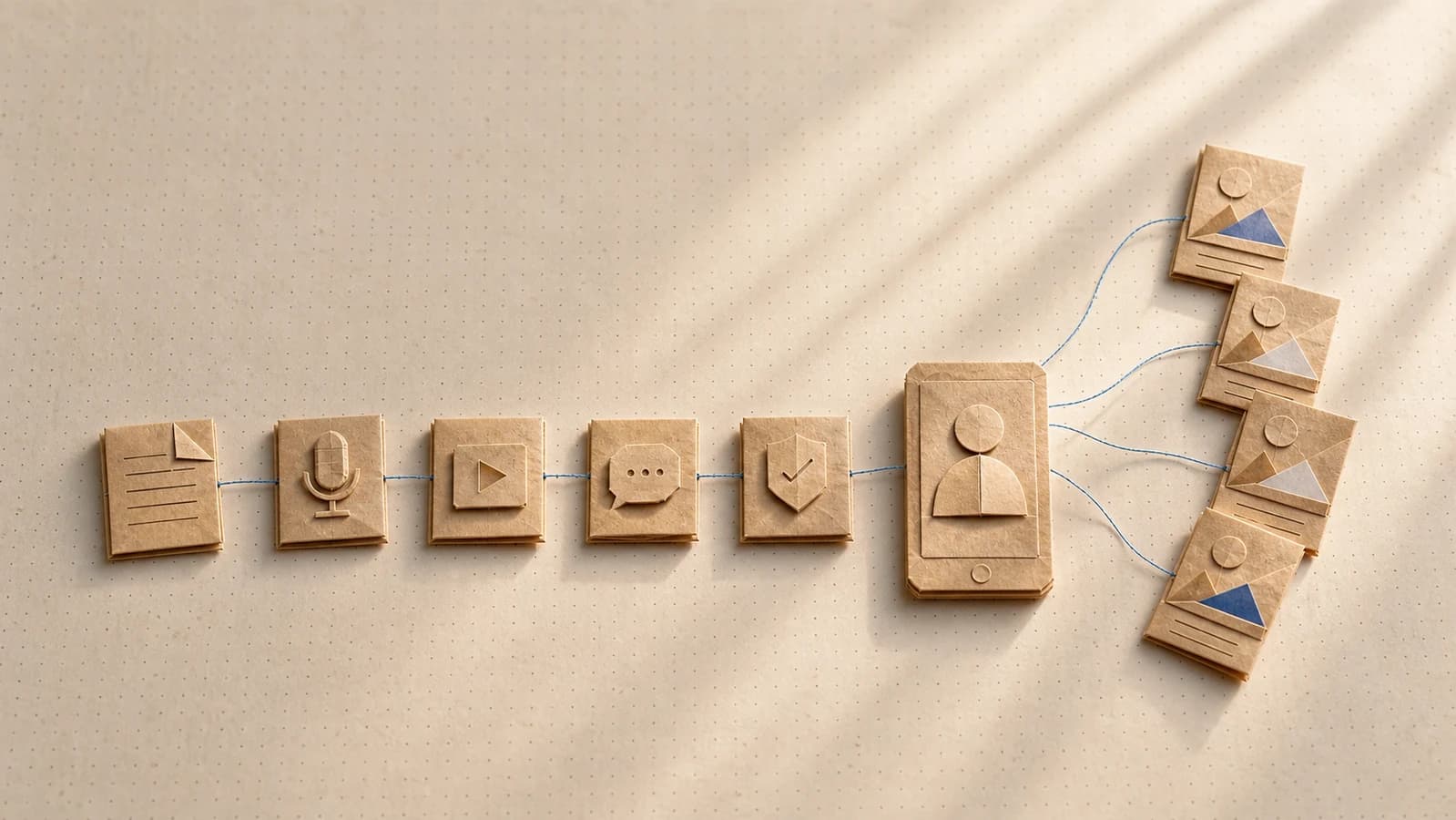
AI UGC ads: the honest playbook for on-brand creative at scale
AI UGC ads let lean teams test creator-style video at volume. Here's the honest playbook for making them on-brand and keeping them on the right side of the FTC's rules.
AI workflows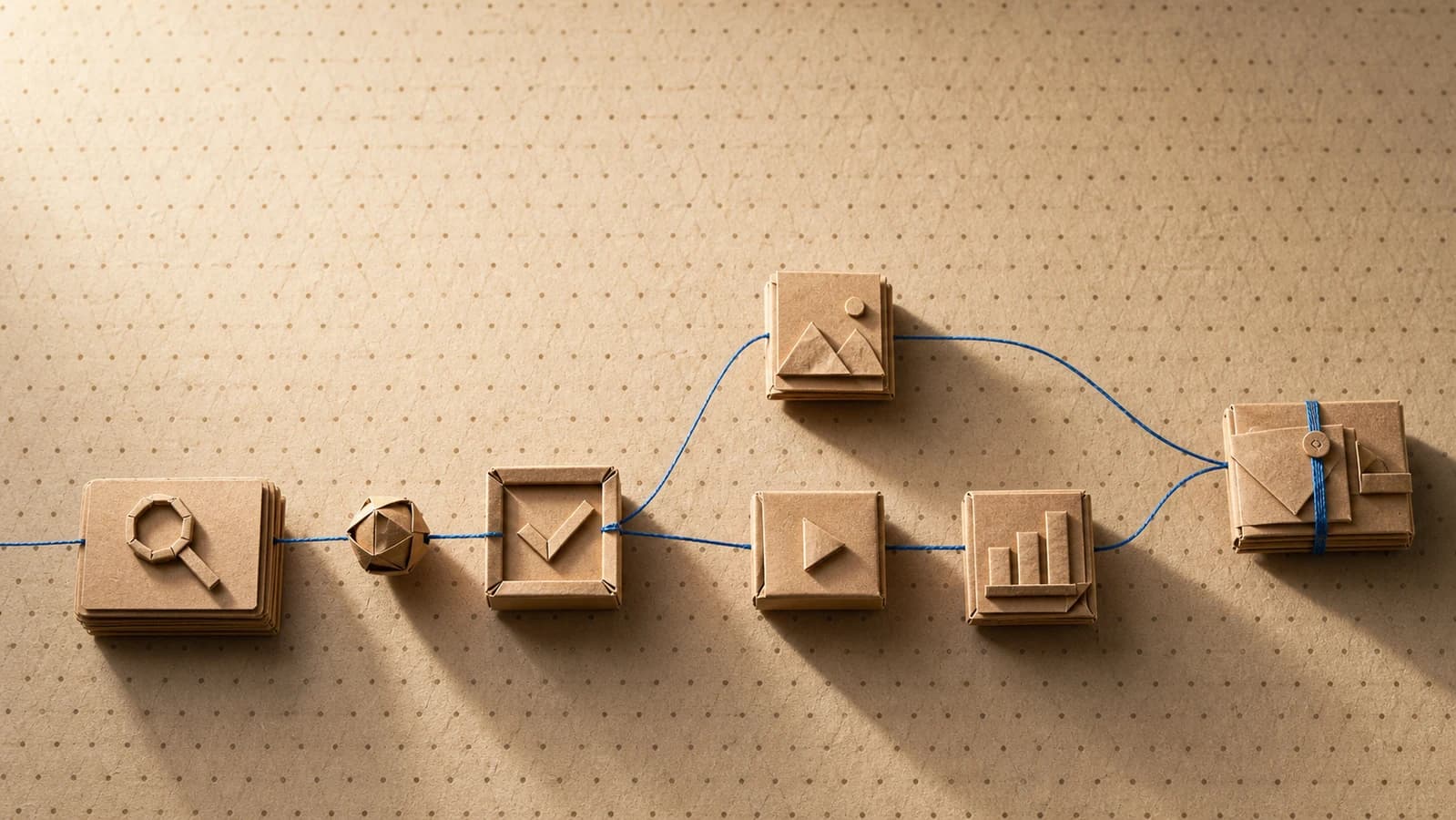
AI content agents: what they actually do for marketing teams
AI content agents don't just generate one asset; they run multi-step content work on their own. Here's what they really do, where they help, and how to keep them on-brand.
AI workflows
From prompt to pipeline: making AI content repeatable
Teams climb the same ladder: one-off prompts, saved prompts, prompt chains, visible pipelines. What breaks at each rung, and the three properties that make AI content actually repeatable.
AI workflows
Image-to-video AI: the workflow that keeps your videos on-brand
Text-to-video reinvents your brand on every clip. Image-to-video anchors each generation to a reference image, so your characters and products stay consistent. Here is how it works and when to use it.
On-brand AI
AI content disclosure: what marketing teams must label before August 2026
New EU rules require labelling AI-generated content from August 2, 2026. Here's what disclosure means for marketing teams, how watermarks and Content Credentials work, and how to stay on-brand while staying compliant.
AI workflows
Generative engine optimization: how to get your content cited by AI search
AI search engines answer questions instead of listing links. Here's what actually gets your content cited by ChatGPT, AI Overviews, and Perplexity, plus what Google says to skip.
On-brand AI
How to keep AI images and video on-brand
AI output drifts off-brand by default. A six-step playbook for getting your colors, style, and voice into every image and video you generate.
Playbooks
The AI ad variants playbook for performance marketers
A step-by-step system for turning one approved ad concept into a tested matrix of on-brand variants (hooks, formats, and audiences) without losing your brand along the way.
Playbooks
AI creative for agencies: keep every client on-brand
Agencies juggle many brands at once, and AI that drifts off-brand is a client-trust problem. A playbook for per-client brand kits and one reusable pipeline.
Tools & comparisons
The best AI image generators for marketing teams (2026)
Eight AI image generators compared for marketing work (output quality, brand control, team fit, and licensing) from Midjourney to Firefly, plus where a multi-model canvas fits.
Tools & comparisons
The best AI video tools for ads (2026)
Veo, Sora, Kling, Runway, Creatify, HeyGen, and Orisu compared for ad work: what each is strongest at, where it falls short, and how pricing works.
AI workflows
How to build an AI content workflow
Chat threads don't scale into production. Here is the full method for building an AI content workflow: define the recurring output, map the steps, add human review, and save it as a graph your team can rerun.
On-brand AI
Introducing Orisu: the on-brand AI content canvas
Orisu is live. Paste your website, get a brand kit, and generate on-brand images, video, text, and audio on one visual canvas, with 100+ models under one subscription.
Playbooks
On-brand product imagery for ecommerce, without a studio
Turn one clean product photo into lifestyle scenes, seasonal variants, and channel sizes that all match your brand, without a studio or a reshoot.
AI workflows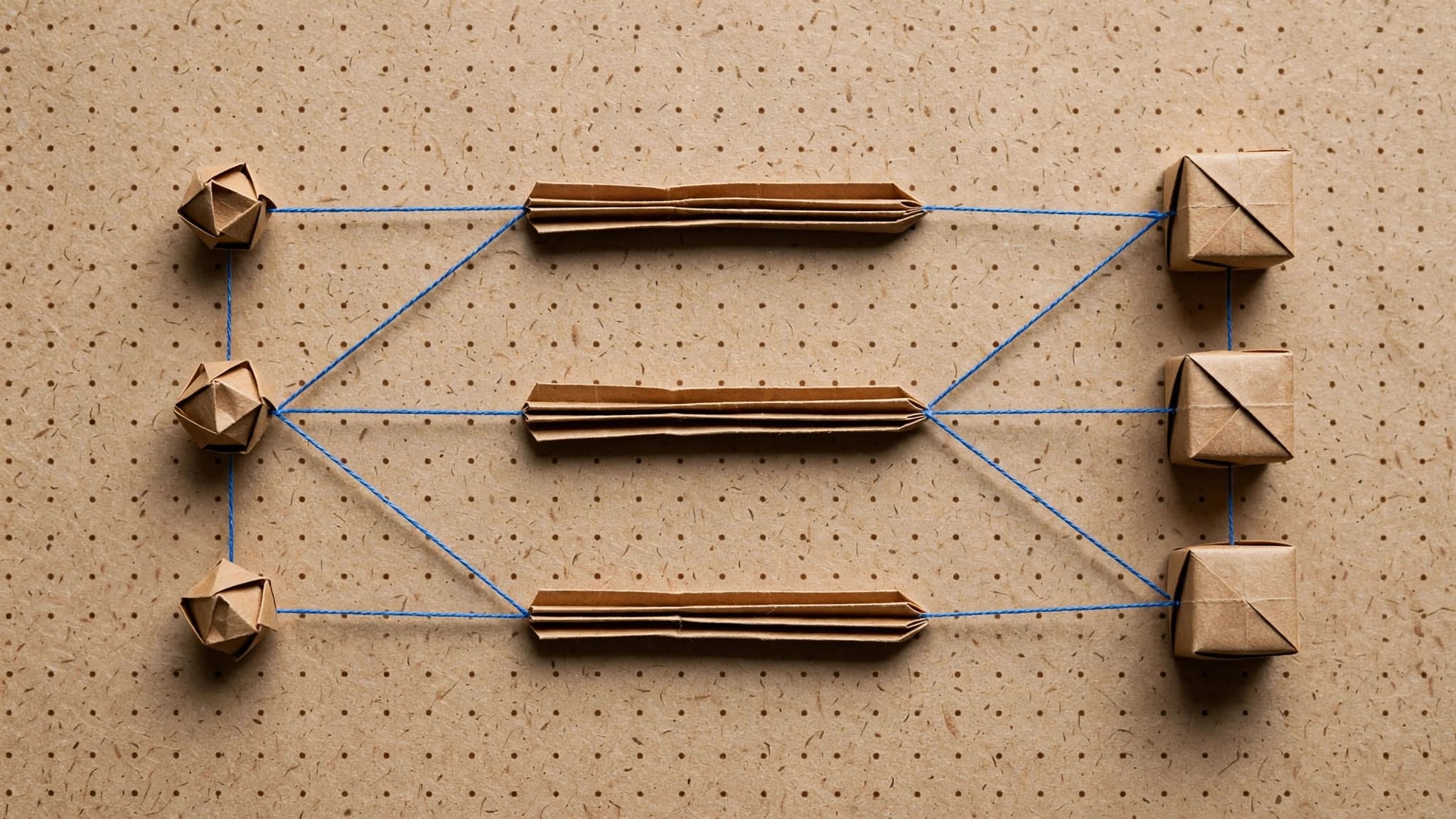
What is a visual AI canvas? Nodes, edges, and runs explained
Nodes, edges, and runs: the three primitives behind every visual AI canvas, how it compares to chat and automation tools, and when a canvas is overkill.
On-brand AI
What is an AI brand kit?
An AI brand kit is a machine-readable brand system that AI generation reads automatically. Here's how it differs from PDFs, asset folders, and prompt snippets.
On-brand AI
Why your AI content looks off-brand (and how to fix it)
AI output looks generic because models average the internet and prompts can't carry a brand system. Here's the diagnosis, and the fixes, cheapest first.