AI ad localization at scale: one campaign, every market, on-brand
Translating an ad is the easy part. Keeping it on-brand across every market is the hard part. Here's a repeatable workflow for localizing AI ad creative at scale.
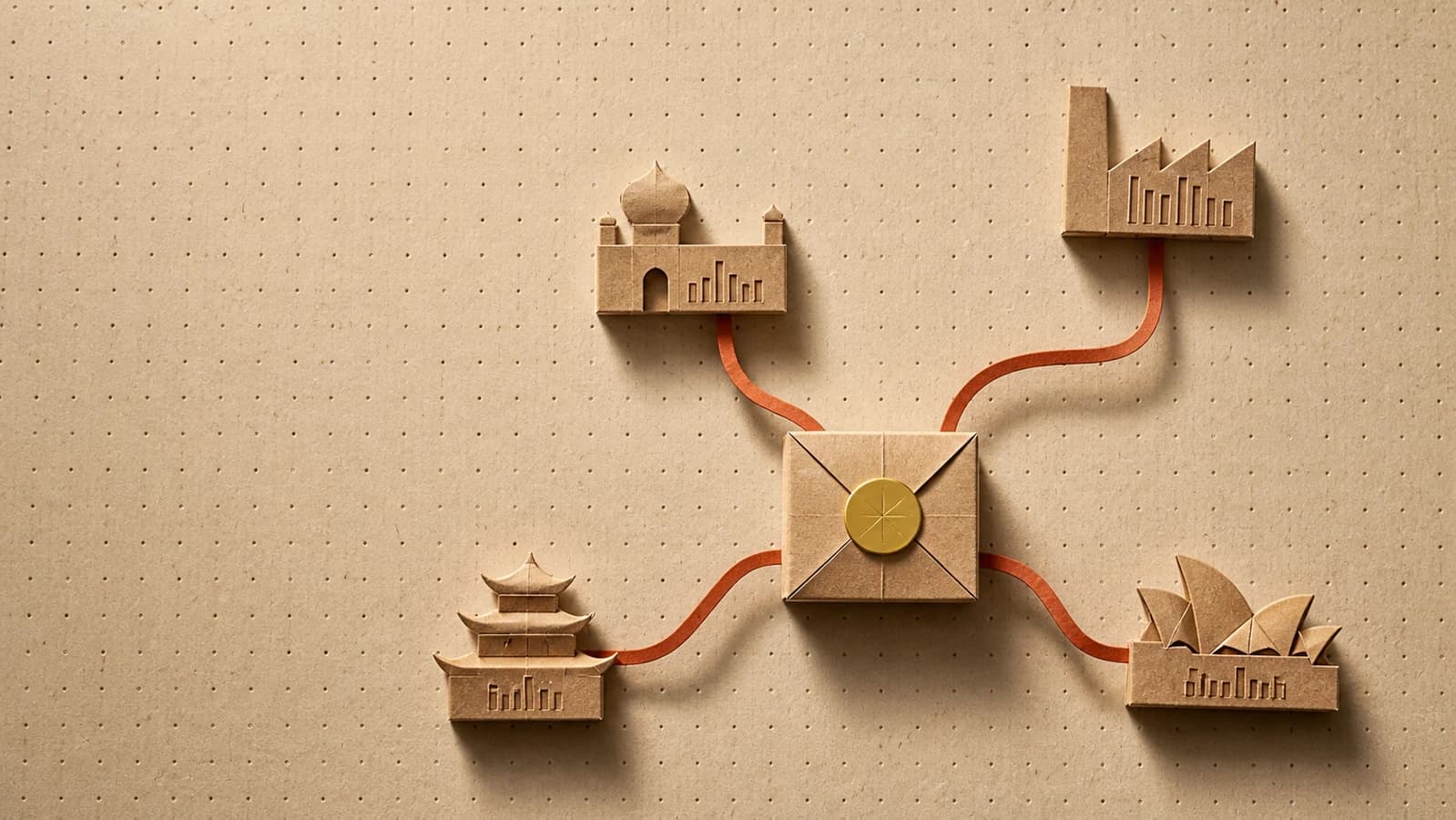
You have an ad that works. The hook lands, the creative converts, and now the obvious next move is to run it everywhere: five markets, then ten, then every region your product ships to. That's where most teams hit the wall. The winning ad was made for one language and one audience, and turning it into a dozen on-brand versions has always meant either a big localization budget or a long week of manual rework per market.
AI ad localization means adapting one ad into many language and market versions (copy, voiceover, and visuals) while keeping it consistent with your brand across all of them. It is not the same as translation, and treating the two as identical is the most common way localized ads go wrong. This playbook walks through a repeatable workflow for doing it at scale: what to lock down before you start, the steps in order, and the mistakes that quietly turn a global campaign off-brand.
What "ad localization at scale" actually means
Translation swaps words for their equivalents in another language. Localization adapts the whole ad so it feels like it was made for that market: the copy reads naturally, the tone fits, the on-screen text is legible, the voiceover sounds right, and the visuals don't clash with local expectations. A literal translation can be word-perfect and still land wrong: a pun that doesn't survive the jump, a claim that reads as pushy in one culture and flat in another, a headline that no longer fits the layout once it's three words longer in German.
"At scale" adds the second problem: doing this for many markets without the quality drifting. The first version is always the careful one. By the eighth, if every version is a fresh manual job, small inconsistencies creep in: a slightly different color, an off-brand voice, a logo that moved. Scale is where consistency breaks, which is exactly the problem a repeatable workflow exists to solve (more on that discipline in how to keep AI images and video on-brand).
Why localizing ads is worth the effort
The case for localization is about reach, and the numbers are stark. As of October 2025, English was used by roughly half of all websites, about 49% (Statista), while English speakers are a minority of the world's population. Run only English creative and you're speaking the first language of a small slice of your potential audience.
It also changes whether people buy. In CSA Research's long-running "Can't Read, Won't Buy" study of 8,709 consumers across 29 countries, 76% of online shoppers said they prefer to buy products with information in their own language, and 40% said they will never buy from websites in other languages (CSA Research). Localization isn't a nicety for those buyers; it's the difference between a sale and a bounce. The same study found 75% are more likely to buy from a brand again when support is in their language, so the payoff compounds past the first purchase. What changed recently is the cost: AI now handles the per-version work that once made localization a line item only big brands could afford.
The AI ad localization workflow, step by step
The goal is one source ad and one workflow that produces every market version the same way. Here's the order that holds up.
1. Lock the source ad and your brand inputs
Pick the single best-performing version as your master, and finalize it before you localize anything. Every change you make after this multiplies across markets. At the same time, gather your brand inputs in one place: colors, fonts, logo, and reference clips or images that define the look and voice. Pulling these from a brand kit means every localized version starts from the same definition of "on-brand" instead of someone's memory of it.
2. Separate what travels from what changes
Go through the ad and split it into two buckets. What travels unchanged across markets: the brand marks, the core visual style, the product, the structure. What changes per market: spoken and on-screen copy, voiceover, currency and units, and any visual that carries a cultural read. This split is the core of the workflow. The "travels" bucket keeps the campaign recognizably one brand, and the "changes" bucket is the only part you regenerate per market.
3. Translate the copy, then have a human check it
Use AI to produce the first-draft translation of every line, then route each one to a native speaker for a final read. AI translation is fast and good enough to draft from, but it misses idioms, gets tone wrong, and writes lines that are grammatically clean and culturally off. Headlines, claims, and anything funny need a human who knows the market. Keep on-screen text short. It has to fit the layout after translation, and many languages run longer than English. For non-negotiable wording, set it as a real type layer rather than asking an image model to render it (the reasoning is in text in AI images for marketing).
4. Regenerate the visuals per market
For any shot that has to change (on-screen text, a setting, a model that should reflect the local audience), regenerate it through the same image or video step, feeding in the same brand references so the new version matches the master. Because the brand inputs are wired in, a German and a Japanese cut come out looking like the same campaign in two languages, not two different campaigns. For variants built off one hero asset, the same logic as the AI ad variants playbook applies: change the one thing that needs to change, and hold everything else fixed.
5. Handle voice and audio per market
For video, the voiceover is where a localized ad most obviously lives or dies. AI voice generation can produce a localized track in the target language, and some video models now generate audio in the same pass as the picture, which removes a whole production step (we covered that shift in AI video with native audio). Match the voice to the brand's tone, not just the language. A playful brand shouldn't suddenly sound corporate in market number six. Treat the generated audio as a strong first pass you refine, especially where a specific voice or licensed music matters.
6. Review every version against the brand, then ship
Before anything runs, every market version goes through one review step: does it match the brand look, does the copy read right to a native speaker, is the on-screen text legible and correctly placed, does the voice fit. Building this check into the workflow, rather than hoping each person remembers it, is what keeps the tenth version as on-brand as the first.
Variations: other markets, formats, and inputs
The same workflow flexes a few ways. For more markets, you add language and review steps, not a new process. For more formats (a 9:16 social cut, a 1:1 feed version, a 16:9 pre-roll), you localize once and resize within the same canvas. And for an evergreen campaign, you keep the workflow as a living template: when the offer changes, update the master and re-run every market in one pass instead of reopening a dozen separate projects.
Common mistakes to avoid
The first is treating localization as translation: swapping words and shipping, with no native-speaker check and no cultural read. The second is localizing before the master is final, so every later edit has to be redone across every market. The third is letting the brand drift: regenerating visuals without feeding the brand inputs back in, so each market slowly looks like a slightly different company. The fourth is over-trusting AI voice and text without a human on the last mile. A mispronounced product name or a garbled headline undoes the polish of everything else. Each of these traces back to the same root cause: the rules living in someone's head instead of in the workflow.
The runnable version
The reason localization gets expensive isn't the translating. It's the rebuilding. Every market done as a one-off means re-importing brand assets, re-checking the look, re-doing the layout. Fold those steps into a single node-based canvas and the cost per market drops to running the workflow again with a new language input. You compose it once (the brand kit, the translate step, the regenerate-visuals step, the voice step, the review gate), and then each market is a run, not a rebuild. That's the same "build it once, run it everywhere" idea behind how to build an AI content workflow, pointed at global reach.
If you want a head start, the ad localization workflow is built for exactly this, and you can open a template, drop in your brand, and run your winning ad into a second market to feel the difference. Localization stops being a budget question and becomes a workflow you run: one campaign, every market, still on-brand.
This playbook is a pipeline.
Build it once on the canvas, wire in your brand kit, and rerun it every time the brief changes. Free to start, no card.
Common questions.
What is AI ad localization?
AI ad localization is adapting one ad into many language and market versions using AI models for the parts that change (copy, voiceover, and on-screen visuals) while keeping the brand consistent across all of them. It's broader than translation: it covers tone, cultural fit, formats, and on-brand look, not just swapping words for their dictionary equivalents.
Is localizing ads with AI worth it for a small team?
Often yes, because AI removes the per-version production cost that used to make localization a big-budget project. A small team can adapt a winning ad into several markets from one workflow instead of rebuilding each from scratch. The honest caveat: AI handles the volume, but a human who knows the market still has to check the result before it runs.
Do I still need human review if AI does the translation?
Yes. AI translation is a fast first draft, not a final cut. It can miss idioms, get tone wrong, or produce copy that's grammatically fine but culturally off. The reliable pattern is AI for speed plus a native speaker for the final read on anything that ships, especially headlines, claims, and humor.
How do I keep localized ads on-brand across markets?
Wire your brand inputs (colors, fonts, logo, and voice references) into the workflow once, and run every market version through the same steps. When the brand rules live in the workflow instead of in each person's head, the tenth market version looks and sounds like the first instead of like a different company.