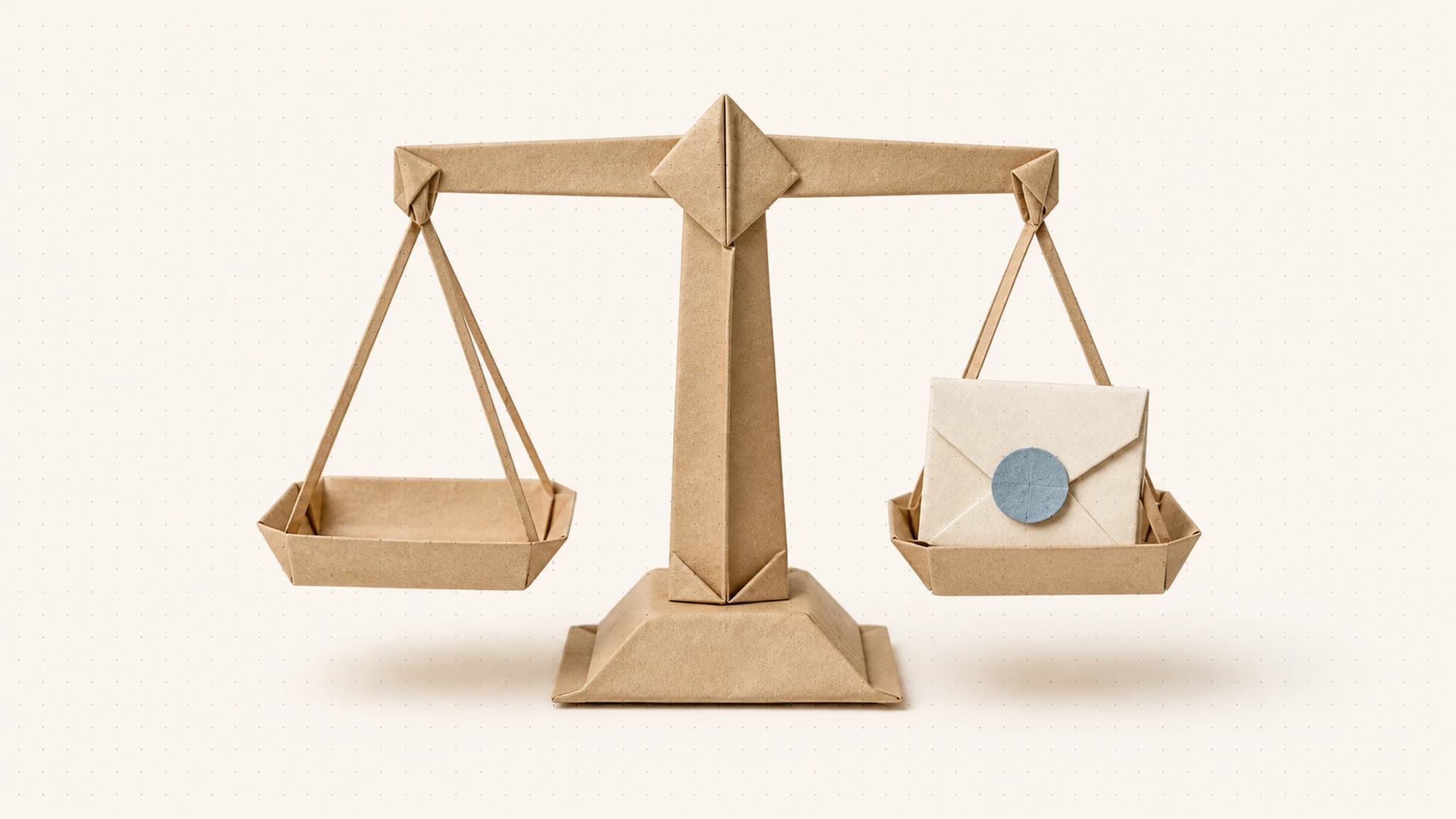
Why your AI content looks off-brand (and how to fix it)
AI output looks generic because models average the internet and prompts can't carry a brand system. Here's the diagnosis, and the fixes, cheapest first.
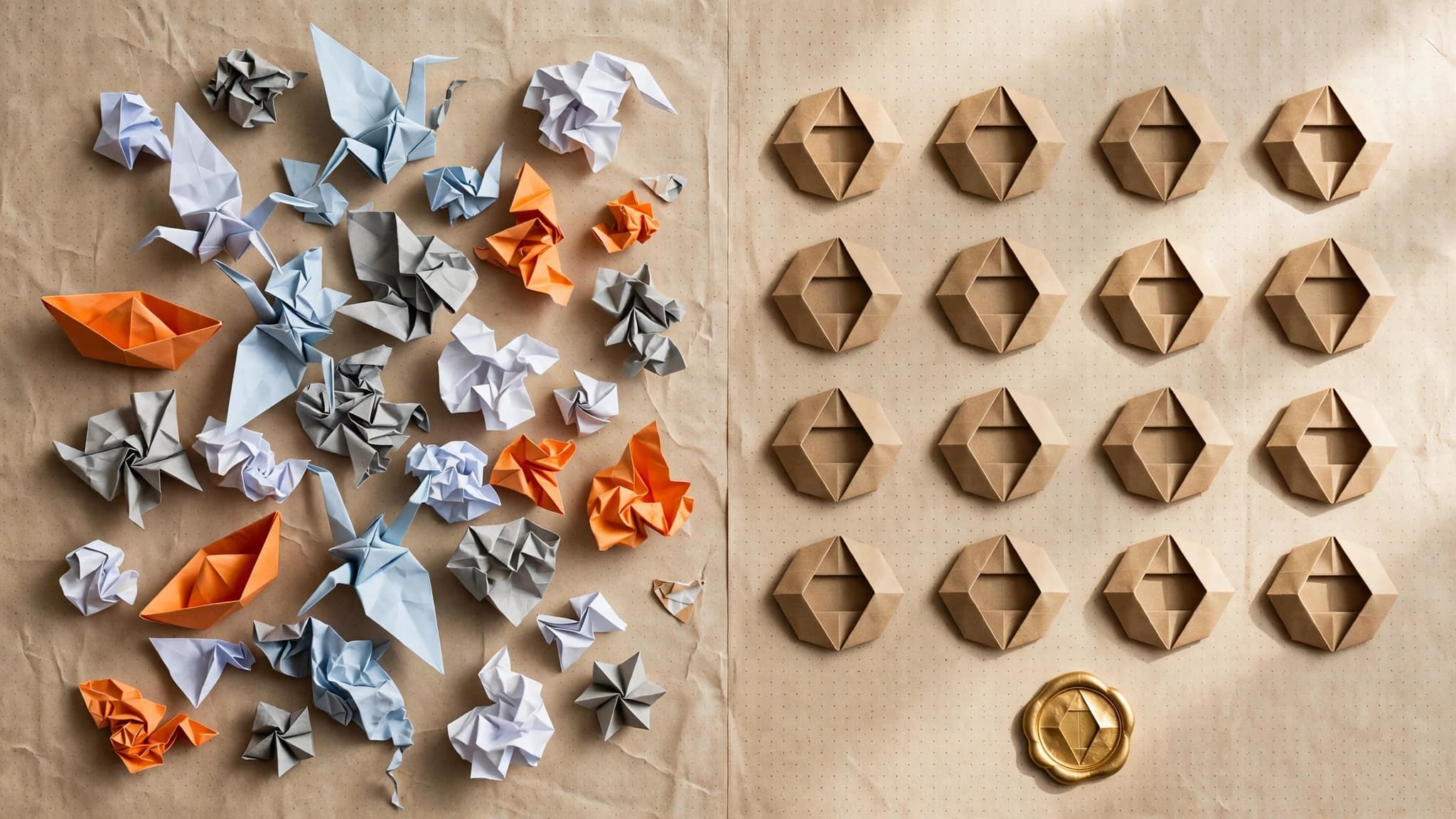
Your AI content looks off-brand because the model never knew your brand in the first place. Generation models default to the internet's average aesthetic, prompts can't reliably carry a brand system, and every teammate prompts differently. The fix is moving brand context out of people's heads and into the workflow itself.
That's the short version. The longer version is worth understanding, because each cause has a different fix, and the fixes range from free to "adopt a new tool," so it pays to know which problem you actually have.
Why does AI-generated content look generic?
Generation models are trained on enormous slices of the internet. Their default output is, mathematically, a blend of everything they've seen: the most common lighting, the most common composition, the most common copywriting cadence. Train on averages, produce averages.
Your brand is the opposite of an average. It's a deliberate set of deviations: this palette and not a pleasing one, this voice and not a neutral one, this way of staging a product and not the usual way. Anything your prompt doesn't explicitly pin down, the model fills in with its defaults, and the defaults are the average, which belongs to no one.
This is why AI output from a fintech startup and a candle company can look weirdly alike. Neither brand was in the request, so both got the same middle-of-the-internet aesthetic back. The flattening is measurable: a 2024 study in Science Advances found that short stories written with generative AI help were rated higher individually but were more similar to one another than stories written by humans alone. The model isn't ignoring your brand. It was never given your brand in a form it could act on.
Why don't prompts carry your brand?
The obvious response is "write better prompts," and it does help, for one person, for a while. But prompts fail as a brand system for a structural reason: they're free text, and free text has no enforcement.
A brand is a system: exact colors, named fonts, logo rules, voice rules, banned words, composition habits, format specs. A prompt is a paragraph. Even a very good paragraph holds a fraction of the system, and nothing stops the next person from trimming the fraction further. Nobody retypes a full brand guideline into a prompt box, and the model wouldn't reliably honor all of it if they did.
Worse, prompts mutate. The great brand prompt someone wrote in March gets copied into a doc, shortened in Slack, "improved" for a new campaign. Each copy drifts a little. Within weeks there are several versions in circulation and no canonical one. I think of this as prompt entropy: brand context stored in free text decays by default.
Why does each teammate's AI output look different?
Even if prompts didn't decay, people write them differently. Your designer prompts with visual vocabulary, your copywriter with tone words, your founder with whatever's fastest at 11pm. Each one's mental model of the brand is a different lossy compression of it, and the model faithfully renders each compression as a different-looking result.
So the brand fractures along team lines. Assets from person A are recognizably consistent with each other and subtly inconsistent with person B's. No one is wrong, exactly; everyone is sampling the brand from memory, and memories don't match. The more people generating, the wider the spread.
A human design lead solves this in the traditional process by being the funnel everything passes through. AI removes the funnel, since generation is now something everyone does, without replacing the consistency the funnel provided.
Why doesn't AI output get better over time?
A new designer's third month on your account beats their first, because they accumulate feedback. Raw model usage accumulates nothing. The model doesn't remember what you approved yesterday or what you rejected last week; every generation starts from zero.
Most teams also have no mechanism for capturing that feedback themselves. Rejections happen in Slack threads and disappear. The same off-brand mistake, like washed-out colors or a phrase you'd never use, gets made, caught, and re-made indefinitely. Without a feedback loop, you don't have a learning system; you have a slot machine with a mood board.
How do you fix off-brand AI content?
In order of cost, cheapest first. Each step gives a real improvement on its own; they also stack.
-
Write one canonical brand block. One document, owned by one person: exact hex values, named fonts, voice rules written as instructions ("second person, no exclamation points, never these words"), and never-rules ("never show the product at this angle"). Every prompt must include it verbatim, copied whole, never paraphrased. Cost: an afternoon. This single move removes the biggest drift source: people describing the brand from memory.
-
Build a small reference library. Pick five to ten approved assets that show correct lighting, composition, and staging, and attach them to generations as reference images wherever your tools allow. Models follow examples far better than adjectives. Anthropic's own prompting guide calls well-chosen examples "one of the most reliable ways" to steer output format, tone, and structure. Cost: an hour of curation, ongoing discipline to keep it current.
-
Standardize the workflow, not just the prompt. Agree on the sequence as a team (which model for which job, which settings, what gets reviewed before shipping) and write it down where everyone works from it. The goal is that two teammates given the same brief produce assets that look like siblings. Cost: a meeting and some documentation, plus the willpower to keep people on it.
-
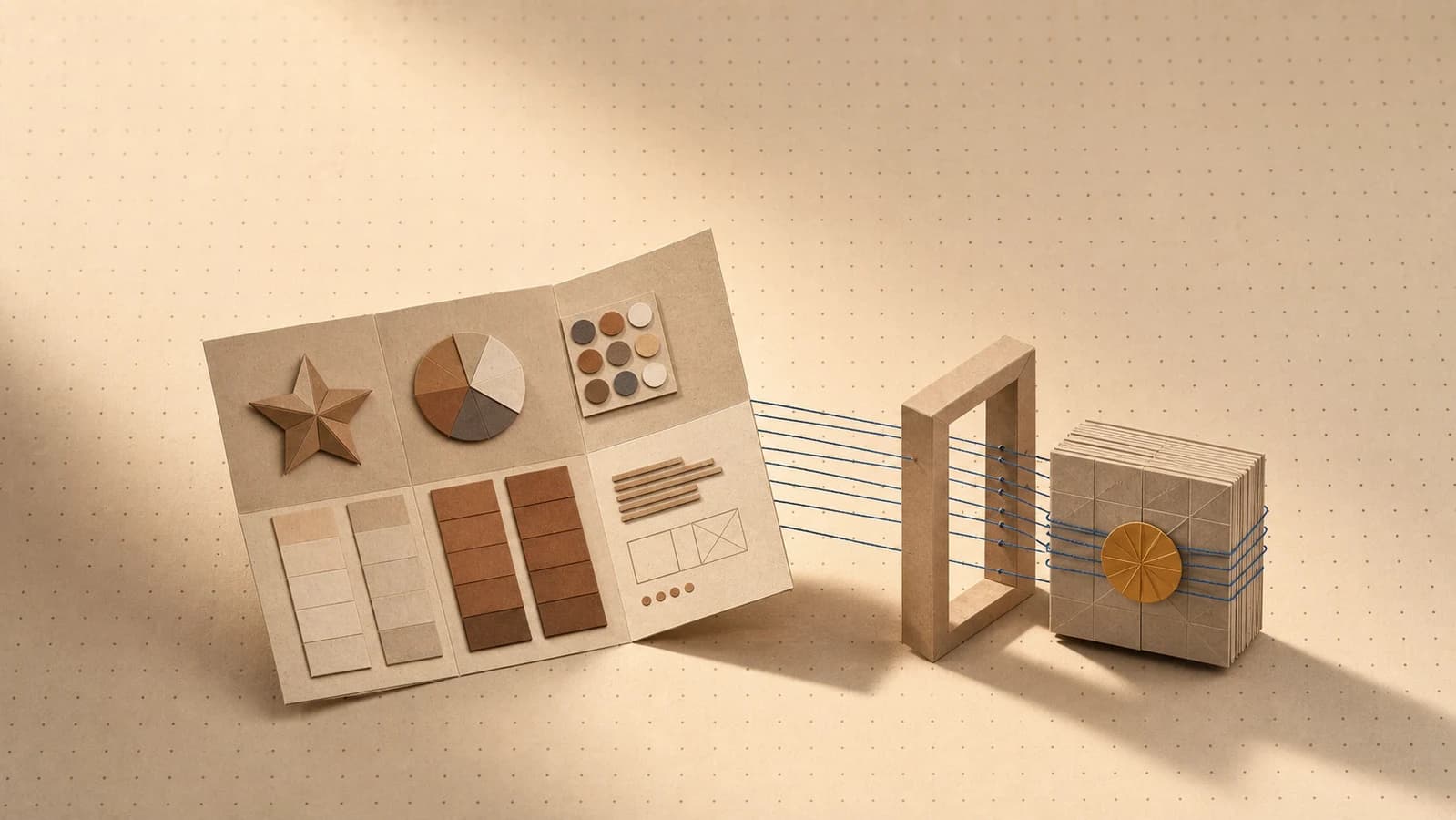
Adopt a brand kit that injects automatically. Steps 1 to 3 all depend on human diligence, which is exactly what erodes. The structural fix is moving brand context into the platform layer: a brand kit, with colors, fonts, voice, logo, and guidelines stored as structured data, that's applied to every generation automatically, no matter who's prompting. In Orisu you get one by pasting your website URL; it's extracted from your site and injected into every output by default. (What goes into a kit and how injection works: what is an AI brand kit.) Cost: a new tool in the stack, though there's a free tier, so trying it costs nothing.
-
Close the feedback loop. Add a review gate before anything ships, and treat every recurring rejection as a missing rule: fold it back into the brand block or the brand kit. This is what gives your system the thing raw models lack: the ability to get more on-brand over time instead of repeating the same misses.
Notice the pattern: every fix moves brand context from memory to system. The cheap fixes do it with documents and discipline; the durable ones do it with structure and automation. Start at step 1 today, and climb only as far up the list as your volume justifies.
This post is part of our complete guide to on-brand AI content, which covers the full framework (codify, inject, repeat, review, measure) in depth.
Your brand kit is one URL away.
Paste your site and Orisu builds the kit — colors, fonts, voice, logo — then holds every generation to it.
Common questions.
Why does AI-generated content look generic?
Generation models are trained on huge slices of the internet, so their default output is the statistical average of everything they've seen. Anything your prompt doesn't explicitly specify, like lighting, palette, or tone, gets filled in with that average, which by definition belongs to no brand in particular.
Do better prompts fix off-brand AI content?
Partly, and temporarily. A detailed brand prompt improves single results, but prompts decay as they're copied and edited across a team, and they can't carry a full brand system. Durable fixes move brand context out of free text and into a shared, structured layer applied automatically.
What is the cheapest way to make AI content more on-brand?
Write one canonical brand block (exact colors, fonts, voice rules, never-rules) and require every prompt to include it verbatim. It costs an afternoon and immediately removes the biggest source of drift: each teammate describing the brand from memory, differently, every time.
How do I make AI content match my brand automatically?
Use a brand kit: your colors, fonts, logo, voice, and guidelines stored as structured data and injected into every generation by the platform rather than pasted in by people. Combined with saved, rerunnable workflows, it makes on-brand the default instead of an act of memory.